
A live series on the patterns that undermine execution.
Nine 90-minute Friday sessions for CEOs, founders, and senior executives. September 18 through November 13, online.
The premise behind the series.
Our frame for this series developed over a decade of consulting work with mid-market leadership teams. What kept surfacing was that execution problems rarely came down to strategy or capability. They came down to specific, recurring patterns in how decisions moved, failures were processed, and ideas traveled or didn't. Naming those patterns and working them directly became the intervention.
This series takes nine of those patterns and works each one in a live 90-minute session. The format is not a lecture and not a workshop. Each session runs the diagnostic on a specific pattern, examines what it looks , and works the specific move that changes it.
Sessions can be taken individually, by tier, or as the full series.
The framework at the heart of the sessions.
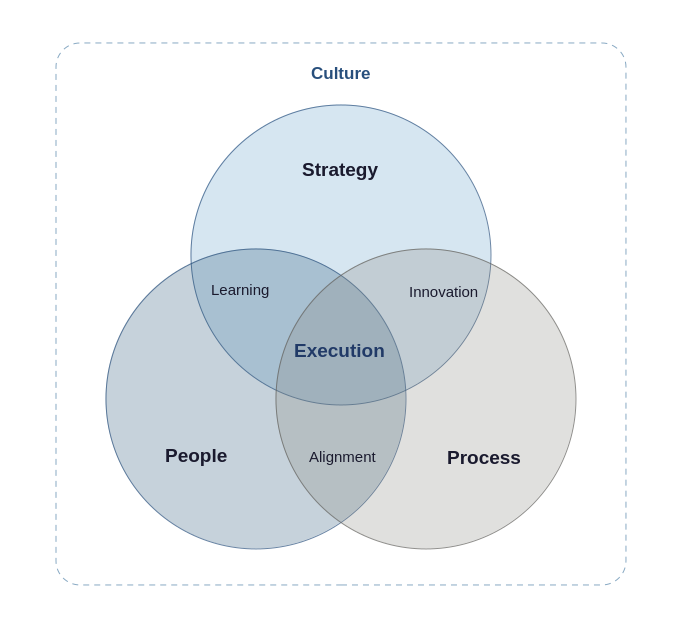
The nine sessions map to a working framework that has emerged from consulting engagements with mid-market organizations. Three domains — Strategy, People, Process — sit at the center of what any organization does. Three intersections between those domains are where organizations most reliably break down: Alignment (people and process), Learning (people and strategy), and Innovation (strategy and process). Culture is the environment all of this operates within. Execution is what the whole structure exists to produce.
The series is organized into three tiers of three sessions each. The first tier works the individual leadership patterns that shape everything downstream. The second tier works the three domains as load-bearing systems. The third tier works the intersections where those systems either function together or fail together.
"Ed led a thoughtful and insightful manager training for our managers that sparked meaningful conversation and gave us practical tools we could apply immediately. His approach is grounded in curiosity, observations, and empathy, which made the session engaging and actionable. I would highly recommend Ed to any organization looking for a Leadership Consultant or Executive Coach."
Recent Client
Registration Options
TIER 2 · The Machinery
Strategy, people, process. The systems that bear weight — or do not.
The middle three sessions address the organization's load-bearing systems. A real strategy gives directional guidance in situations the plan did not anticipate. A senior team is only as strong as the conditions it can withstand. Process either enables people to handle the unpredictable or becomes a tax on the work itself. Each session runs the diagnostic on one system honestly and asks whether it will hold when it needs to.
TIER 3 · The Points of Failure
Where the system comes apart.
The final three sessions explore the intersections between load-bearing systems—the seams where organizations most reliably break down. Cross-functional handoffs. What actually happens after a failure. Whether ideas reach the leader or stop travelling upstream. These are not culture problems. They are failure modes with specific mechanics, and you can work on those mechanics directly.
The Sessions
TIER 1 · Individual Development
Reflexes, plateaus, bottlenecks.
The first three sessions focus on the leader personally. What we default to under pressure. Where we have quietly stalled without noticing. What we are still holding that no one else has been asked to carry. These patterns shape the behavior of the organization downstream, and they are difficult to address from inside the seat.
Meet Ed Brzychcy
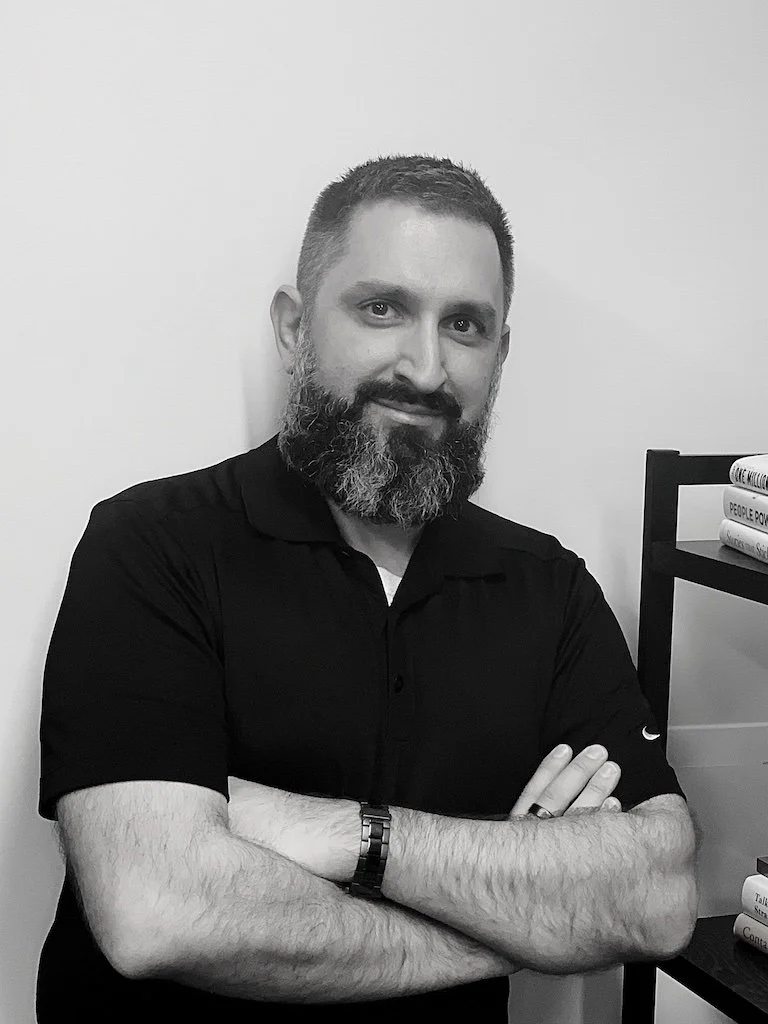
Ed Brzychcy is a consultant, executive coach, and speaker specializing in leadership development, organizational design, and strategic implementation for middle-market companies across a range of industries. His work centers on the operational patterns that determine whether organizations execute on what they intend, and the specific interventions that change those patterns.
Prior to consulting, Ed served twelve years in the U.S. Army Infantry, retiring in 2011 as a Staff Sergeant and squad leader after three deployments in Operation Iraqi Freedom. He received his MBA from Babson College in 2016 and has since served as a Visiting Assistant Professor of Practice in Organizational Behavior at Babson. He is a TEDx speaker
Ed lives in Waltham, Massachusetts. He publishes weekly writing at leadfromthefront.ebmeridian.com and hosts the Frontline Leaders video and newsletter on LinkedIn
Questions attendees have asked.
-
Mid-market CEOs, founders, presidents, COOs, and senior leaders at the vice-president level and above. The content is calibrated for organizations between roughly $5 million and $250 million in revenue. Attendees who find the session titles resonant and who recognize the patterns being named are the intended audience.
-
The format does not suit attendees looking for a lecture-style webinar, a certification program, or a set of tools to add to an existing workshop. The sessions are working sessions. Attendees are in the room to work the diagnostic on their own organizations, not to watch someone else present a framework.
-
Every registered attendee receives the session recording within 24 hours, with 90-day access. Live attendance is where the diagnostic lands with the most force, but the recordings preserve the substance.
-
Each session runs 90 minutes on Zoom, facilitated live by Ed. The format uses Mentimeter for real-time interaction—word clouds, live polls, and structured questions—and includes extended Q&A throughout. Group size is intentionally kept small enough to allow for genuine conversation, and large enough to surface patterns across different organizations in the room.
-
Yes. Cancellations up to 48 hours before a session receive a full refund. After that window, we offer credit toward another session in the current series or a future run.
-
Ed records host video and shared screen only. No participant video, no chat text, and no third-party AI notetakers. Recordings are made available exclusively to registered attendees.
-
The conversation is intentionally flexible. Some attendees use it to work a specific decision on their desk. Others use it to work through a framework question that surfaced during a session. Others use it as a strategic conversation about their organization. The one-on-one becomes bookable after Session 3.
-
Organizations sending three or more attendees receive a 15% discount across all product tiers. Contact Ed directly at ebrzychcy@ebmeridian.com to coordinate.
-
Fall 2026 is the first live run. Whether and how we offer the series again in 2027 will depend on what we learn from this cohort. Attendees in this run will be the first to work the framework in its current form.